

The Department of Economics and Finance Students Visit Sun Hung Kai Center to Explore Real Estate Development and Career Opportunities
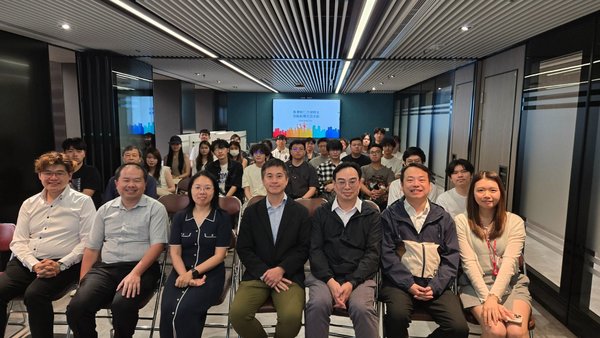
On 14 April 2026, students enrolled in the FIN446 Property Valuation, Funding and Finance course of the Department of Economics and Finance at Hong Kong Shue Yan University, led by Professor Rita Li (Programme Director of the MSc in FinTech Management and Director of the Sustainable Real Estate Research Center), Dr Edward Tang, and Dr Raymond Yeung, visited the Sun Hung Kai Centre to gain first hand insights into real estate development in Hong Kong and related career opportunities.
The seminar began with Prof Rita Li’s introduction to the Department of Economics and Finance program, which is recognized by the Royal Institution of Chartered Surveyors (RICS) under Associate RICS, as well as the Bachelor of Science (Honors) in Surveying and Dispute Resolution, which will be launched at Shue Yan University. She was followed by Senior Training Officer Miss Yannes Lau, who introduced the various business areas under Sun Hung Kai Property (SHKP), including clothing, food, housing, and transportation, where our students may find future job opportunities.
Dr Benson Chan then introduced how the conditions of Constructed Floor Area (CFA), Gross Floor Area (GFA), and greenery area influence real estate project development strategies. CFA represents the usable built floor area and directly reflects the intensity of development. When the sites have more CFA, developers can receive higher potential revenue by offering more assignable floor space. Gross Floor Area (GFA), on the other hand, is a key planning and regulatory metric used by governments to control development density and land use intensity. It generally includes all above-ground floor areas and, in some cases, certain below-ground areas such as carpark. GFA limits determine the maximum allowable development scale and directly affect plot ratio, project yield, and land value. Dr Benson Chan also discussed the implications of the BEAM Plus system in Hong Kong, including the use of vertical gardens on building facades.
Towards the end of the program, Mr John Cheung, Human Resources Manager, introduced full-time job opportunities to our Year Four Department of Economics and Finance students, as well as their internship program. Dr. Raymond Yeung then wrapped up the event.
The visit provided students with a valuable opportunity to bridge classroom learning with real‑world industry practice. By gaining first‑hand exposure to real estate development, sustainable building design, and day‑to‑day industry operations, they enriched their understanding of the profession and found meaningful inspiration as they plan their future career paths.
樹仁大學經濟及金融學系學生參訪新鴻基中心 深入了解房地產發展與行業前景
樹仁大學經濟及金融學系 FIN446《物業估值、融資及金融》課程學生,於 2026 年 4 月 14 日在李綺雯教授(金融科技管理理學碩士課程主任及可持續房地產研究中心總監)、鄧志豪博士及楊偉文博士的帶領下,前往新鴻基中心參觀,深入了解本地房地產發展及相關的就業機會。
活動伊始,李綺雯教授向同學介紹經濟及金融學系的課程發展方向,並指出該課程已獲英國皇家特許測量師學會(RICS)專業認可(AssocRICS)。同時,她亦介紹了即將於樹仁大學開辦的測量及爭議解決(榮譽)理學士課程,為有志投身測量及房地產相關專業的同學提供更多升學及專業發展途徑。
其後,新鴻基地產高級培訓主任劉琬恩小姐向同學介紹集團多元化的業務版圖,涵蓋衣、食、住、行等與市民日常生活息息相關的範疇,並分享集團對人才的需求及學生未來可發展的職業方向。
隨後,陳曉明博士講解建造樓面面積(CFA)、總樓面面積(GFA)及綠化元素如何影響房地產項目的發展策略。建造樓面面積(CFA)代表可使用的建成樓面空間,直接反映項目的發展強度。當用地容許較大的 CFA 時,發展商一般可透過提供更多可分配樓面面積,從而提升項目的潛在收益。相對而言,總樓面面積 (GFA)則是政府用以管制發展密度及土地使用強度的重要規劃與監管指標,通常包括所有地上樓面面積,並在某些情況下涵蓋部分地下空間,如停車場。GFA 的限制決定了項目可容許的最高發展規模,並直接影響地積比率、項目產量及土地價值。此外,陳博士亦探討了香港 BEAM Plus 綠色建築評估制度的影響,包括在建築外牆採用垂直綠化設計的應用與意義。
活動尾聲,新鴻基地產人力資源經理鄭偉傑先生向經濟及金融學系四年級學生介紹集團所提供的全職工作機會及實習計劃。最後,楊偉文博士為是次參訪活動作總結發言,並感謝新鴻基地產對學生學習與發展的支持。
是次參觀活動讓學生能將課堂理論與業界實務相結合,加深對房地產發展、可持續建築及行業實際運作的理解,對未來的職業規劃具重要啟發作用。